Ontario's Road Salt Problem Is Worse Than You Think
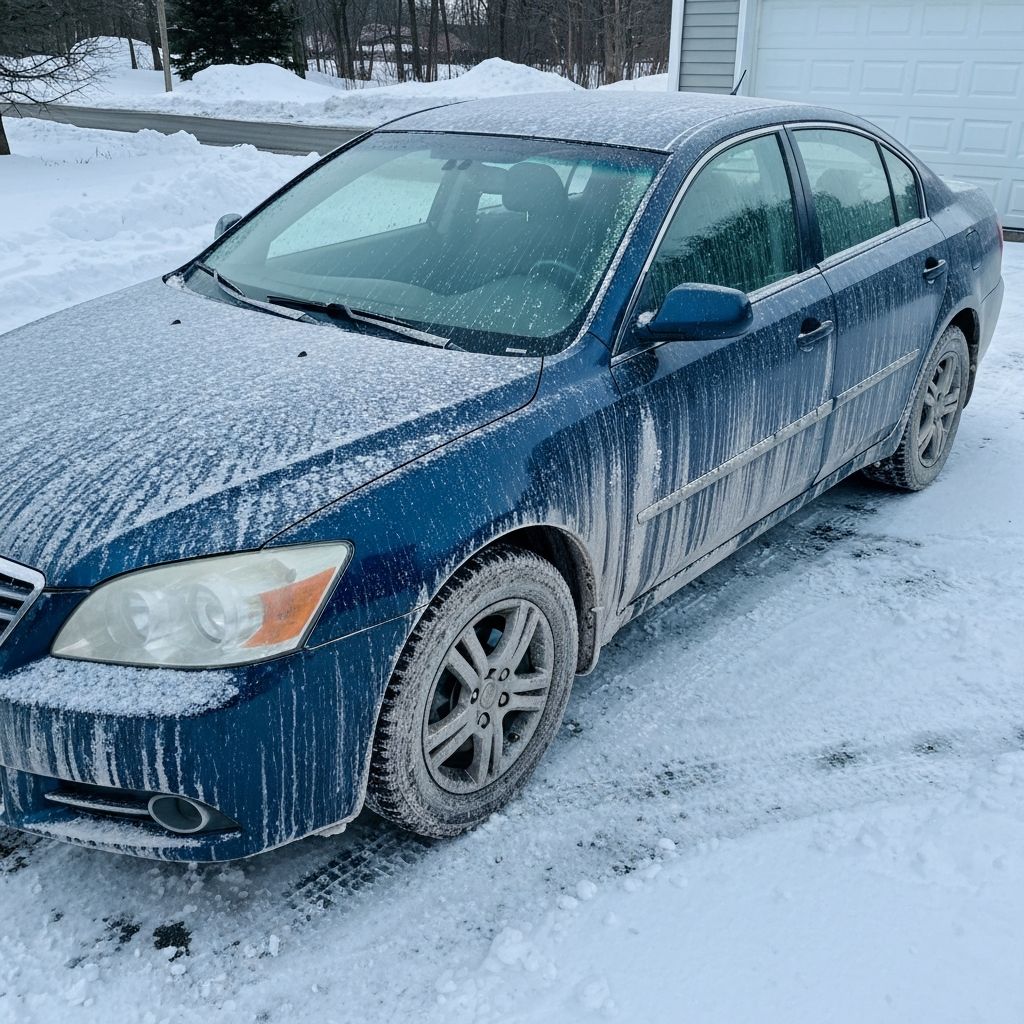
Ontario municipalities apply an average of 200 to 500 kilograms of salt per lane-kilometre per winter season — and in some storm events, application rates spike even higher. The salt (sodium chloride and calcium chloride) keeps roads drivable, but it's extraordinarily corrosive to every metal surface on your vehicle. In fact, Transport Canada and the automotive industry have long identified road salt as the primary cause of vehicle corrosion in Canada, contributing to billions of dollars in vehicle damage and hundreds of millions in infrastructure maintenance costs annually.
If you're driving an Ontario vehicle without proper protection and regular cleaning, your car is being slowly destroyed from the outside in. Here's exactly how.
The Chemistry: What Road Salt Actually Does to Your Car
How Salt Causes Rust
Rust forms through an electrochemical process called galvanic corrosion. Iron in steel reacts with oxygen and water to form iron oxide (rust). Normally, this process is slow. But salt dramatically accelerates it by acting as an electrolyte — it significantly increases the conductivity of water, making the electrochemical reaction happen 10 to 15 times faster than in unsalted conditions. A small chip in your paint that might take five years to develop visible rust in a dry climate can start rusting visibly within one Ontario winter if salt gets into it.
Where Salt Attacks First
Salt doesn't just hit the flat panel surfaces you can see. The most dangerous accumulation happens in the hidden areas of your vehicle:
- Wheel wells and inner fenders: Salt-laden water sprays directly into these areas at high velocity while driving, and it accumulates in the textured plastic liners where it's protected from rain rinse-off
- Frame rails and rocker panels: The lowest structural points of the vehicle collect runoff that pools and sits, attacking the metal continuously
- Door bottoms and sills: Salt-contaminated water runs down the doors and collects in the drain holes, which frequently become clogged
- Undercarriage: The entire bottom of the vehicle is directly exposed to road spray
- Brake and fuel lines: Metal lines running the length of the vehicle are chronically exposed and can develop pinhole leaks
Beyond Metal: Other Winter Damage You're Ignoring
Paint and Clear Coat
Salt doesn't just attack metal — it etches into your clear coat, dulling the finish and creating microscopic pathways for water infiltration. Calcium chloride (used heavily in Ontario winters because it's effective at lower temperatures than sodium chloride) is particularly aggressive on paint chemistry.
Rubber Seals and Weatherstripping
The rubber seals around your doors, windows, and trunk are exposed to extreme cold (which makes rubber brittle), road salt (which dries out and degrades rubber compound), and repeated compression from opening and closing. Dried, cracked seals lead to wind noise, water leaks, and eventually water intrusion into the vehicle's structure.
Interior Damage from Winter
Winter tracking is real — every time you get in your vehicle in Ontario winter, you're bringing in road salt on your boots, wet snow and ice that melts into the carpet, and road grime. Over a season, this deeply embeds itself into carpet fibers, stains fabric seats, and creates the musty odour that's characteristic of poorly-maintained Ontario vehicles.
The Protection Plan: How to Stop Winter from Destroying Your Car
Before Winter: The Fall Detail
The most effective thing you can do is prepare your vehicle before the salt season starts. A proper fall detail (September to October) should include: full exterior decontamination with clay bar, fresh wax or ceramic sealant application on all painted surfaces, rubber seal conditioning with a silicone-based protectant, undercarriage inspection and cleaning, touch-up of any paint chips to prevent rust entry points, and interior protection treatment on carpets and upholstery.
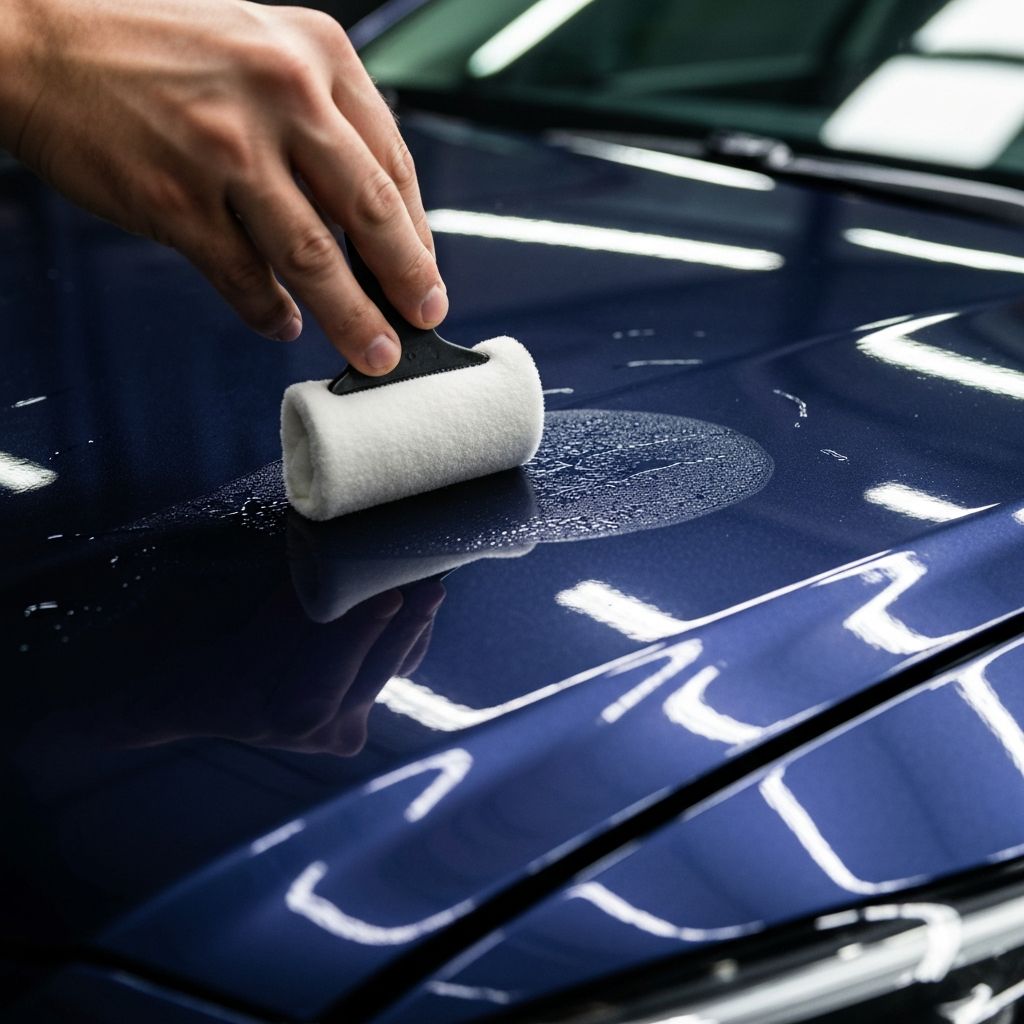
If you're serious about long-term protection, fall is the ideal time to apply a ceramic coating if your vehicle doesn't have one. A properly applied ceramic coating creates a hydrophobic barrier that causes salt water to bead off rather than bond to the surface — dramatically reducing the amount of corrosive material that has sustained contact with your paint.
During Winter: Regular Salt Removal
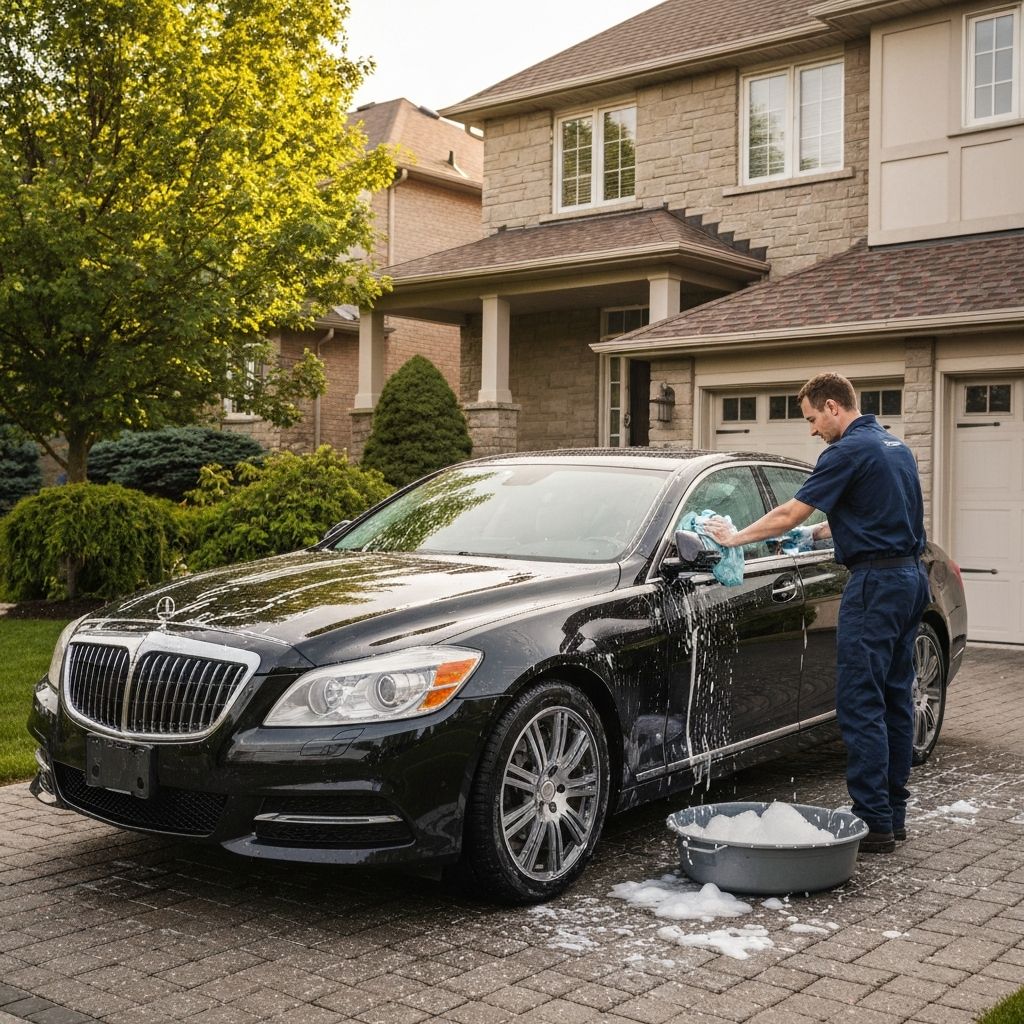
Don't let salt accumulate. After heavy snow events or significant road salt application, rinse your vehicle — paying particular attention to the undercarriage, wheel wells, and rocker panels. Avoid automated brush car washes when your vehicle is covered in salt and grit, as the brushes will grind abrasive particles into your paint. A touchless wash or hand rinse is preferable.
After Winter: The Spring Cleanup
The spring detail is the most critical professional service of the year. A proper spring cleanup includes thorough undercarriage flush with degreaser, wheel well salt removal, exterior clay bar to remove embedded road grime and salt residue, fresh wax or sealant to protect the cleaned surfaces through summer, rubber seal re-conditioning, interior deep clean to remove winter tracking debris, and odour treatment if moisture has created musty smells.
The Real Cost of Ignoring This
A frame replacement or structural rust repair on an Ontario vehicle can cost $2,000 to $8,000. Brake line replacement due to salt corrosion: $400 to $1,200. Paint rust repair on rocker panels: $600 to $2,000 per panel. A full detailing program — fall detail, spring detail, and periodic maintenance — costs a fraction of these repair costs and prevents them entirely. The math is simple. Protect your car now, or pay far more to repair it later.
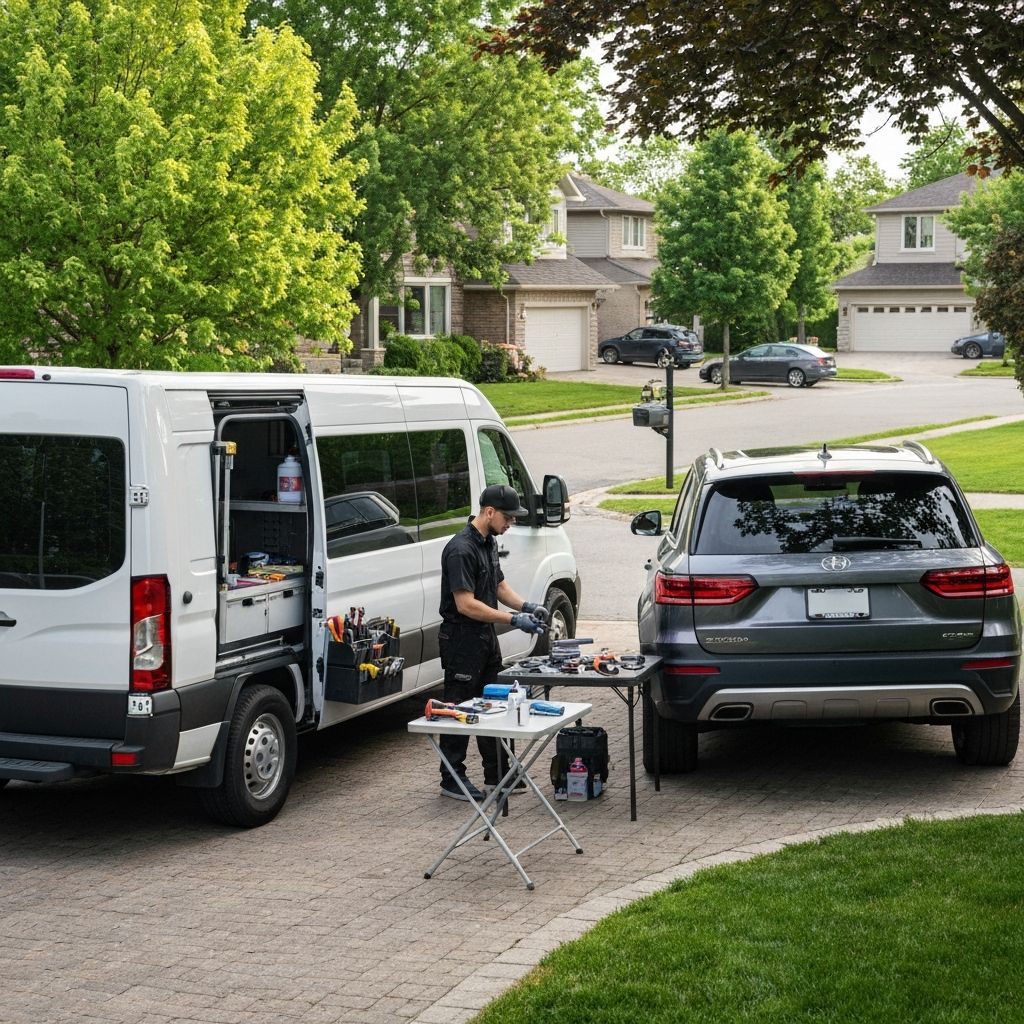
At Seefi Auto Detailing, we offer fall protection and spring cleanup details specifically designed around Ontario's salt season. Our mobile team comes to your driveway so you can protect your vehicle without interrupting your day.